

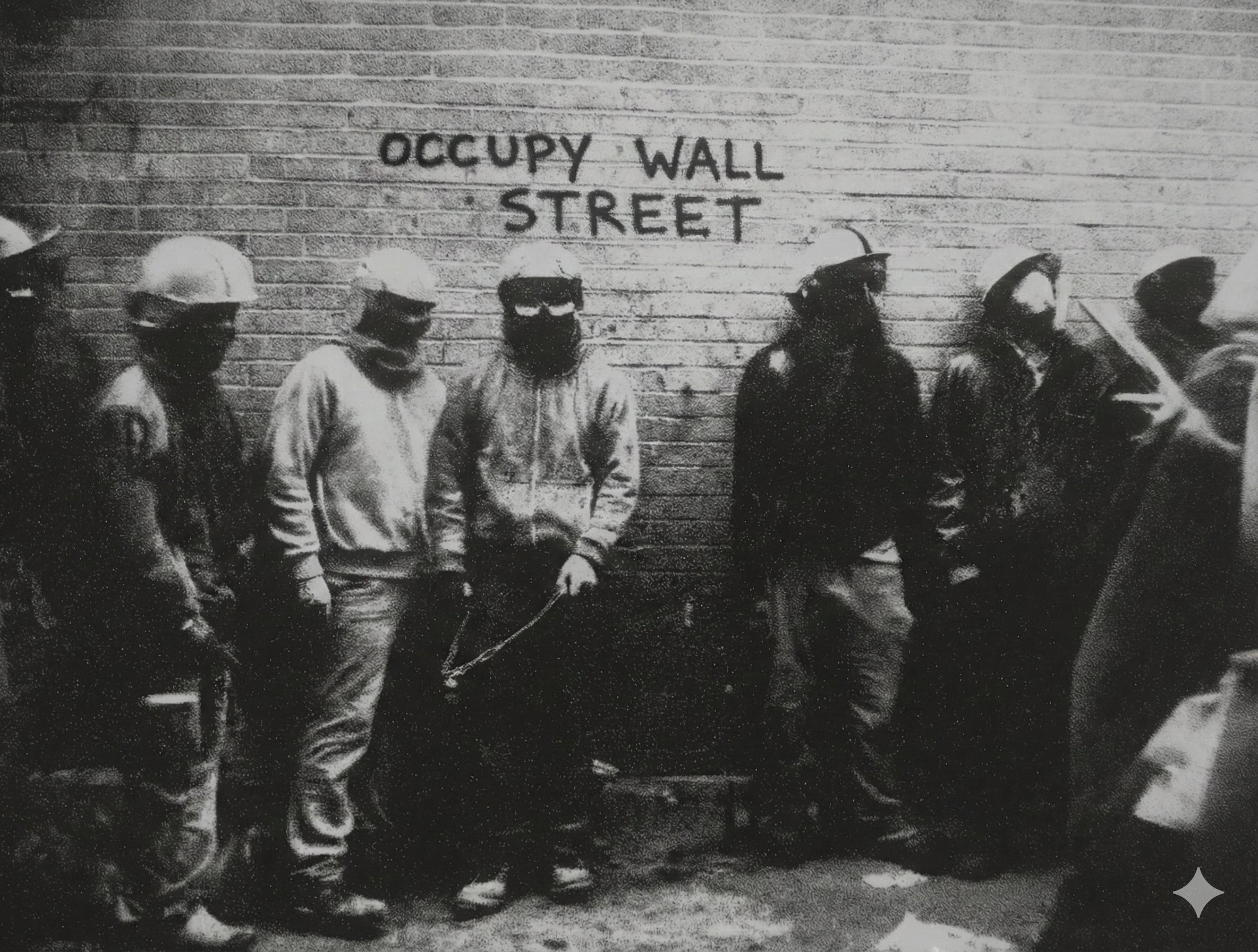
In this special episode of Rufo & Lomez, we examine the inside history of the Left, from the Occupy Wall Street movement to the woke movement that dominated 2020 and, now, to the Left’s post-woke era. We discuss how the Left has moved from obsessions over race, gender, and culture to a policy of economic expropriation—and how the Right should respond to these developments.
Listen to the show on YouTube, Spotify, and Apple Podcasts. The following is an edited transcript for paid subscribers.
Rufo: There’s an interesting argument that I’ve heard articulated from several people, including my colleague at the Manhattan Institute, the social scientist Eric Kaufmann, that we are entering a stage of “post-progressivism” or “post-woke” or “post-DEI” America. I don’t think we’re quite there yet, but there is a kernel of truth that the Left itself—after ten years of woke, from the rise of Black Lives Matter in 2014 to Donald Trump’s victory in 2024—does acknowledge that we’ve entered a different phase. But what comes after woke? Is it a return to the economic Left? Is it the rebirth of Occupy Wall Street? Help us set the stage.
Lomez: I see a couple figures that represent different forks in the Left’s contemporary development. There’s Zohran Mamdani, who’s doing this kind of pragmatic woke fusionism or something. It’s distinct, I think, from AOC and Elizabeth Warren-style DSA politics. It’s also distinct from Bernie Sanders’s politics, although not that far from him. I think Mamdani is closer to Bernie than many people grasp.
On the other side, there’s a faction of the Left that is represented by people like Noah Smith, Matt Yglesias, Ezra Klein, and Derek Thompson. Klein and Thompson wrote a book called Abundance, which has become a sort of flagship text of a post-woke neoliberal Left. To be sure, there are some figures who are trying to take that neoliberal Left and marry it to a kind of Occupy-style, class-based material Left—take Ro Khanna, the California congressman, who’s one of the most prominent backers of his state’s proposed billionaire tax. In the conservative mind, all this stuff gets sort of mixed together. But the Left’s tensions and factions are serious and ought to be understood by the Right.
The other piece is the MAGA position on all of this. What is the MAGA answer to either the abundance agenda on the one hand, or a Warren-style anti-corporatism and anti-free marketism on the other? Some parts of the MAGA coalition seem open to imposing constraints around capital and enterprise.
Rufo: What’s interesting is that, as you’re suggesting, the Left and the Right have factions that are, in some sense, mirror images of one another. There’s the socialistic Left that is leaning into almost Maoist ideas: seize the housing, seize the billionaires’ assets, and redistribute wealth for social programs. It’s the kind of rhetoric that you would hear in 1980s Mozambique or 1980s Central American leftist caudillo republics. The socialist Left cleans it up with polished marketing language once they get into office, but an underlying hardline edge remains.
The neoliberals, in contrast, advocate a technocratic, more Scandinavian-style socialistic policy that recognizes that capitalism is the generator of wealth; nevertheless, they want to have a sophisticated and technocratic method of harnessing capitalism’s power to redistribute its benefits in a market-efficient way.
The Right’s tensions mirror the Left’s in the sense that there’s the old free-market Right—championing supply-side economics, Milton Friedman, and Ronald Reagan. But then there’s a MAGA faction that says, no, intervene to ensure that Blackstone doesn’t own any single-family homes, and put caps on credit card interest rates.
I’m somewhat sympathetic to the MAGA view, at least to a degree. I want family policies that incentivize family life and childrearing. Such economically interventionist policies would certainly differ from the old Reagan Right.
Obviously, there are quite a few ideas here. It’s a moment of flux, after all. So perhaps we can give a bit more of a historical genesis to the current moment. Many younger people don’t remember Occupy Wall Street. Some are sufficiently young that they don’t even remember Bernie Sanders’s moment in 2015 and 2016. Indeed, many younger viewers grew up on woke, AOC-style politics. So, if there is an economic turn—if we go from woke back towards leftist economics—what would that look like? What are the precursors? Where might it go?
