

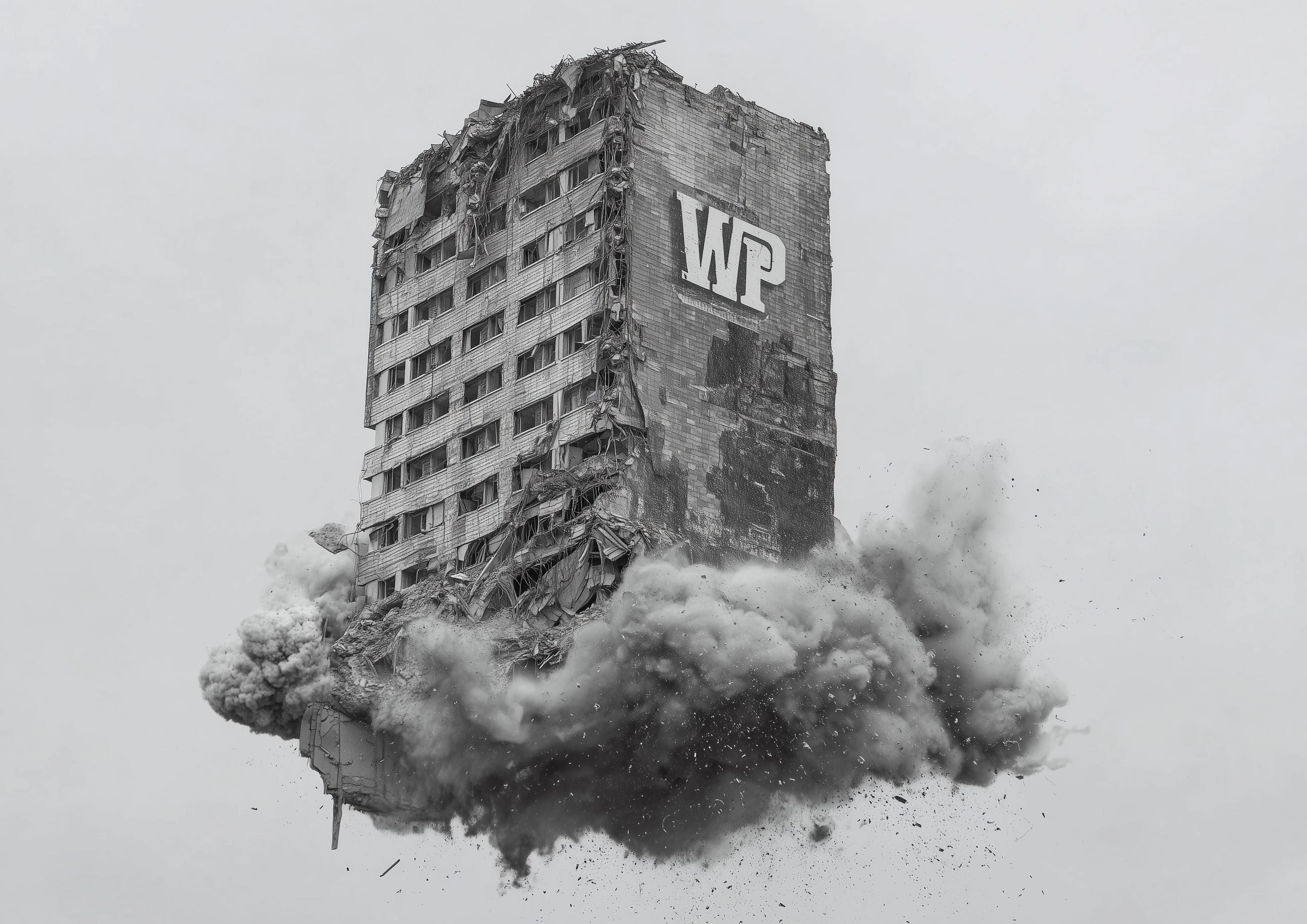
One of the stories I’ve been following for many years is the internet-driven transformation of the media. Jeff Bezos’s recent decision to lay off hundreds of reporters at the Washington Post has reignited my interest in that story. Bezos was reportedly losing $100 million annually through his ownership of the newspaper and finally made the change. Why?
It is a question of history and technology. A half-century ago, America had three broadcast television channels, a handful of national newspapers, one or two regional or local newspapers in each market, and then a slim band of political magazines. At the time, the largest institutions were able to maintain mythologies that gave them enormous power to separate fact from fiction, right from wrong, and news from non-news.
The Post is a great example of this. The paper built its modern reputation on its coverage of the Watergate scandal. It maintained a very strong mythology, brand, and economic engine—all of which survived over a long period of time, but then started to collapse with the internet. During President Trump’s first term, the Post went into free fall when it decided that the only way it could survive amid these changes was to go as far left as possible ideologically, become an anti-Trump newspaper, and highlight the most hysterical and deranged voices: Jen Rubin, Taylor Lorenz, Philip Bump, the so-called fact-checker Glenn Kessler, to name a few.
The underlying story here is that technology and subsequent Trump Derangement Syndrome broke the Post. The internet’s democratic effects on information sharing, together with the outlet’s inability to maintain the perception of ideological balance, completely dismantled their self-serving mythological narratives. Eventually, the financial pressures became so great that Jeff Bezos decided it was time to cut the paper down to size.
How the Post Lost the Power to Punish
Until recently, the Washington Post could police the boundaries of polite society and, when it wanted to, target individuals for destruction. It could ruin your reputation and make you a social pariah. If the Post ran a hit piece on you, that was it. Your time was up.
