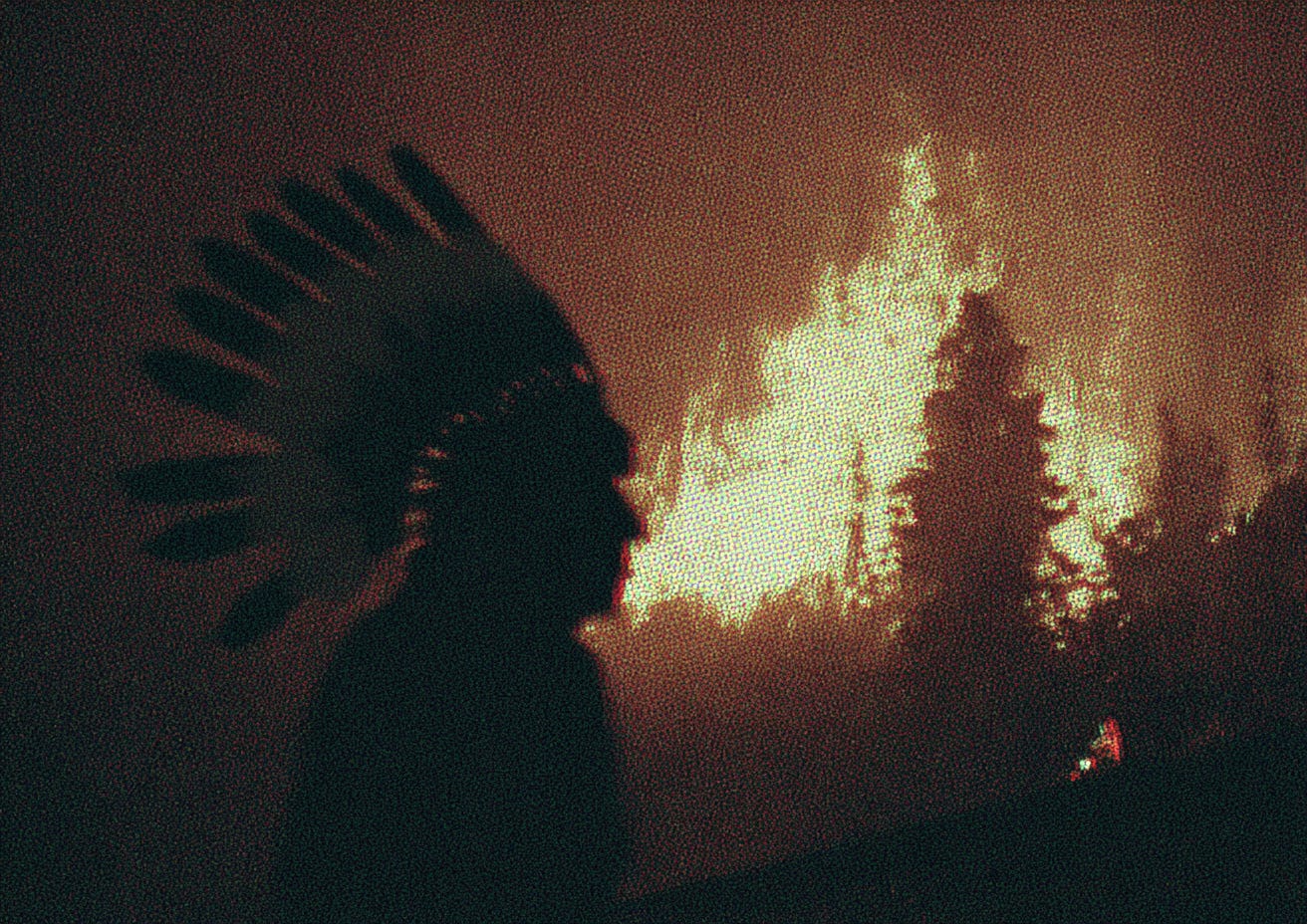
California Teaches Native Americans How to Light a Fire
The state has approved funding for “food sovereignty,” owl counting, and “cultural burns.”
California Governor Gavin Newsom has allocated millions of dollars to a program that funds Native American “food sovereignty,” owl counting, and “cultural burns,” in which tribal groups use traditional fire techniques to clear brush from the landscape and preserve their “close kinship” with plants, animals, and “other natural relatives.”
Since 2023, the California Department of Forestry and Fire Protection, or CAL FIRE, has awarded $24 million to tribal groups and other nonprofits as part of its “Tribal Wildfire Resilience” program. The man effectively overseeing the program, Natural Resources Secretary Wade Crowfoot, believes that California was founded on a “state-sanctioned policy of genocide” and that the state has pursued “decades of land dispossession, discrimination, and disconnection.” The Newsom administration, he said, was making progress in returning the land to the “leadership of California Native American tribes.”
As part of this commitment to “cultural burning,” California has created separate fire-certification processes for nontribal and tribal populations. White, black, Latino, and Asian fire bosses must receive technical certifications, including a 40-hour burn-boss course and, in some cases, a federal certificate. “Cultural fire practitioners,” by contrast, are certified through simple tribal recognition that a person has “substantial experience” burning for cultural purposes.
The “cultural burns” themselves follow various rituals. Some begin with drumming, sage burning, and a prayer. Attendees sometimes go around in a circle, introducing themselves to the land. In the words of Ron Goode, chief of the North Fork Mono Tribe, the land listens to the incantations, and the intention is “to make sure that everything on the landscape—Mother Earth, Creator, everybody—understands why we’re there and what we’re there for.”
Then the burning begins. One tribal member uses a traditional elderberry fire stick instead of a modern lighter. Some use dry branches and cottonwood bundles as kindling. In the words of one tribal chief, “Fire gives life to the land, and everyone benefits from this living spirit.”
While some of the “resiliency” funding has gone toward what appear to be legitimate fire-management projects, a careful examination of the state grant information reveals that much of the program operates as a slush fund for the tribes.
In recent years, CalFire has awarded grants that have dubious fire-management benefits: $1 million for a grant that will help a tribe provide “forest-themed ingredients” to tribe-owned restaurants; $599,000 for another to help renovate land for use as a Native American summer camp; $166,000 to one that will pay for “[t]ribal staff and members” to observe spotted owl nests; $746,000 to one supporting a tribe’s “food sovereignty” and “Fire-Centered Climate Action Plan”; and $521,000 to one that will help a tribe maintain “close kinship” with plants, animals, and “other natural relatives such as water and fire.”
In 2022, California projected that tribes, “cultural fire practitioners,” and others would conduct 25,000 acres of prescribed burning annually by 2025. The state has not released any data on the tribes’ progress, and some tribal leaders apparently insist on keeping the fires small. As Ron Goode explained, “We never burn anything bigger than a big beaver hut.”
For Butte County’s Maidu Indians, the cultural burn initiative seems less about fire management and more about soliciting state funds for cultural programs. “Cultural fire has a lot of cultural aspects to it,” said tribal member Magan Herrera. “We’re burning deergrass for basketry, not necessarily for wildfire resilience, right? But it does have both of those worlds.”
In a video released by CalFire, it appeared that a white man started the process of burning a small lot of land and tribal members later joined in. “We actually learned a lot with this grant,” said one tribal member on the work crew. “When we first started, we really didn’t understand. We thought it was just cutting down trees and piling and burning, but really it was much more.”
While any group is entitled to preserve its heritage, taxpayers are not obligated to subsidize it. California Democrats have sought to mask their handouts to the tribes as a public good, but these are reckless expenditures for a fiscally strained state, with massive risks. The dry season is approaching—and California politicians are playing with fire.
Christopher F. Rufo is a senior fellow at the Manhattan Institute, a contributing editor of City Journal, and the author of America’s Cultural Revolution. Austen Hufford is a senior investigative reporter at City Journal.


....."and they use dollar bills to light the fire.....".......
More kickbacks and money laundering.